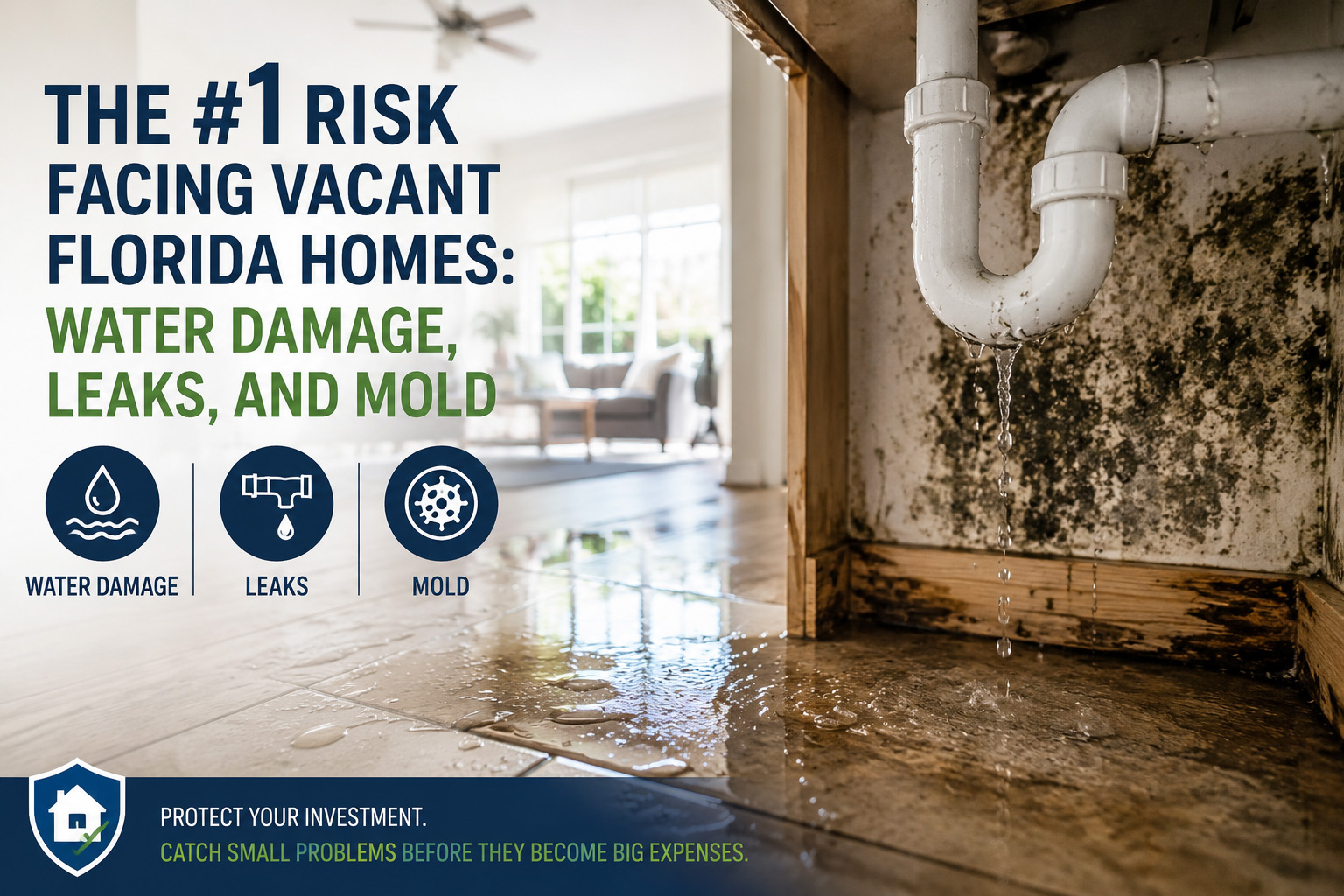
The #1 Risk Facing Vacant Florida Homes: Water Damage
When most homeowners think about threats to their Florida property, they immediately think of hurricanes. Images of high winds, storm surge, and flying debris often dominate the conversation about protecting homes in Cape Coral and Southwest Florida.
While hurricanes certainly deserve attention, they are not the most common threat facing vacant homes.
The reality is that water damage is often the biggest risk to seasonal and unoccupied properties. A small leak that would be discovered quickly in an occupied home can continue unnoticed for days or even weeks when nobody is present. By the time the homeowner returns, a simple plumbing issue may have evolved into extensive water damage, mold growth, and costly repairs.
For seasonal residents, snowbirds, and second-home owners, understanding this risk is one of the most important steps in protecting their investment.
Why Water Damage Is Such a Serious Problem
Most homeowners are surprised to learn that many major restoration projects begin with something small. A loose plumbing connection, a failing water heater fitting, or a clogged air conditioning drain line can start a chain reaction that causes significant damage throughout a home.
When people are living in a property, they naturally notice changes. They hear a drip, see water on the floor, detect a musty smell, or notice a stain forming on a ceiling. These warning signs often lead to quick repairs that prevent larger problems.
Vacant homes don’t have that advantage.
Without regular observation, minor issues can persist for extended periods. Water follows the path of least resistance, often seeping into walls, cabinets, flooring, and insulation long before visible signs appear. The longer the problem remains undetected, the greater the potential damage.
In Southwest Florida, where heat and humidity are present most of the year, the situation becomes even more challenging. Moisture that might dry out elsewhere in the country often lingers here, creating ideal conditions for mold growth and further deterioration.
The Florida Climate Makes Everything Worse
Florida’s climate is one of the reasons so many people choose to live here, but it can also create unique challenges for homeowners.
High temperatures combined with elevated humidity levels mean that moisture problems rarely resolve themselves. Instead, they tend to grow. A small leak beneath a sink or behind an appliance can create an environment where mold can develop surprisingly quickly.
Humidity can also amplify the effects of water damage. Wood products absorb moisture, drywall becomes weakened, and indoor air quality can suffer. What began as a minor maintenance issue can eventually require professional remediation and reconstruction.
This is particularly concerning for seasonal homeowners who may be hundreds or even thousands of miles away while these conditions develop.
Common Sources of Water Damage
Many people assume that water damage only occurs during storms. In reality, some of the most expensive incidents originate from everyday household systems.
Water heaters are one of the most common culprits. As these appliances age, corrosion and worn fittings can eventually lead to leaks. A slow leak may not seem significant at first, but over time it can damage flooring, walls, and nearby belongings.
Refrigerator ice maker lines are another frequently overlooked source of problems. Because these connections are hidden behind appliances, leaks often go unnoticed until damage has already occurred.
Washing machine supply hoses, plumbing fixtures, shut-off valves, and air conditioning condensate systems can all contribute to water-related issues. In many cases, the problem isn’t dramatic. It is simply persistent. Water slowly escapes, spreads into surrounding materials, and creates conditions that become increasingly expensive to correct.
Roof leaks also deserve attention. Florida’s heavy rains can expose weaknesses that may not be apparent during dry weather. Water intrusion can begin long before visible damage appears inside the home.
The Connection Between Water Damage and Mold
One reason water damage becomes so costly is that it rarely remains just a water problem.
Once moisture enters a home, mold becomes a possibility. Mold thrives in warm, humid environments, making Southwest Florida particularly vulnerable.
Many homeowners do not discover mold immediately because it often develops in concealed areas. It may begin behind drywall, beneath flooring, inside cabinets, or within attic spaces. By the time visible signs appear, remediation may already be necessary.
Beyond the financial impact, mold can raise concerns about indoor air quality and the property’s overall condition. This is one reason why early detection is so important. Stopping a leak quickly is often far less expensive than addressing both water damage and mold remediation later.
A Cape Coral Scenario
Imagine a seasonal homeowner who leaves Cape Coral in May and returns north for the summer. Before leaving, everything appears to be in excellent condition. The air conditioner is working, the landscaping looks good, and there are no visible concerns.
A few weeks later, a small fitting on the water heater starts leaking.
The leak is not dramatic. There is no flood and no obvious emergency. Instead, water slowly accumulates over time. Moisture spreads across the floor and into nearby materials. Humidity levels increase, and mold begins to develop in hidden areas.
Because no one is entering the home regularly, the problem continues unchecked.
When the homeowner returns several months later, what should have been a simple plumbing repair has become a major restoration project involving contractors, repairs, cleaning, and potentially mold remediation.
Unfortunately, situations like this occur every year throughout Southwest Florida.
The True Cost of Delayed Detection
The most expensive part of water damage is often not the original leak. The true cost comes from everything that happens afterward.
Water can damage flooring, drywall, cabinetry, paint, insulation, furniture, and personal belongings. Mold remediation may be required. Contractors must be scheduled. Insurance claims may need to be filed. Deductibles must be paid.
In some cases, homeowners lose valuable time as repairs are completed during what was supposed to be an enjoyable stay in Florida.
Many of these situations could have been significantly reduced through earlier detection.
Why Seasonal Homeowners Face Greater Risk
Cape Coral is home to many seasonal residents who spend part of the year elsewhere. While this lifestyle offers flexibility and enjoyment, it also presents a challenge: no one is routinely monitoring the property.
When homeowners are hundreds or thousands of miles away, they have no practical way of knowing whether a leak has developed, whether the air conditioner is functioning properly, or whether storm-related damage has occurred.
The longer a property remains vacant, the more important regular inspections become. A home may appear perfectly fine when someone leaves, but conditions can change quickly in Florida’s climate.
How Professional Home Watch Services Help
Professional Home Watch services are designed to provide oversight while homeowners are away.
Rather than wondering whether everything is okay, homeowners benefit from regular visual inspections conducted by someone who physically visits the property. During these visits, obvious signs of water intrusion, excessive humidity, HVAC concerns, storm damage, and other issues can be identified and reported.
The goal is not simply to find problems. The goal is to find them early.
Early detection often means the difference between a manageable repair and a major restoration project.
For many homeowners, the greatest benefit is peace of mind. They know someone local is keeping an eye on the property and communicating any concerns before they become emergencies.
Prevention Is Always Less Expensive Than Restoration
One of the most important lessons in homeownership is that prevention almost always costs less than repair.
Routine inspections help identify developing issues before they can cause extensive damage. A small leak, an air conditioning concern, or an unusual sign of moisture may be addressed before thousands of dollars in damage occur.
For homeowners who spend significant time away from Florida, this proactive approach can protect both the property and the enjoyment of owning a home in Southwest Florida.
Protecting Your Cape Coral Home While You’re Away
Owning a home in Cape Coral should provide peace of mind, not uncertainty. Whether you’re away for a few weeks, several months, or an entire season, protecting your property starts with understanding the risks that vacant homes face.
While hurricanes often capture the headlines, water damage, leaks, and mold remain the most common and costly threats to unoccupied Florida homes. The good news is that these issues are often preventable when they are identified early.
At Lee County Home Watch, we provide professional home watch inspections, detailed reporting, and responsive communication for homeowners throughout Cape Coral, Fort Myers, and surrounding Southwest Florida communities. Our mission is simple: to serve as your professional eyes on your home while you’re away.
If you’d like to learn more about protecting your property and reducing the risks associated with vacant home ownership, contact Lee County Home Watch today. We’re here to help you enjoy your time away with confidence and peace of mind.